
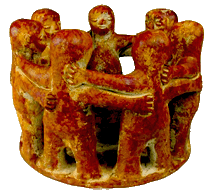
 Rapport is
Rapport is defined here as a link of attention between two people. The link is characterized here as a thoughtform having clarity of memory and intensity of purpose.
- A thoughtform is life field’s expression of an initial concept in a rapport network that binds related concepts in a cohesive gestalt-like, persistent form. Thoughtforms are sensed by other life fields which in some cases may modify the form’s meaning. A life field expresses thoughtforms as experiencing agents (life fields) or meaningful thoughts.
- Clarity of memory involves what is known about the person that facilitates visualization.
- Intensity of purpose can be thought of as the reason we turn our attention to another person and the degree to which that reason is felt.
- A Life field is defined in the Pragmatic Model of Reality as the fundamental unit of awareness. To compare, a life field expresses thoughtforms of meaning and life fields as experiencing agents. A person is considered here as a life field (spirit self) evolved in the greater reality that is entangled with a human life field evolved in the physical aspect of reality for the purpose of gaining understanding through experience.
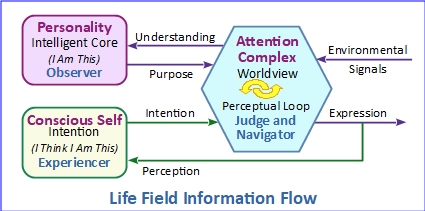
A link of rapport is formed when we become aware of a person. It acquires intensity and character through experience. For instance, meeting a new classmate produces a link of awareness of that person. Through experience, perhaps working as a project team or sharing study sessions, the link of rapport with the person becomes stronger and acquires specific characteristics. We think of the person through the filter of that link.
We develop a network of links of rapport through daily living. Some are immediate and may be quite intense such as a spouse. Others may have receded into memory to be probably only refreshed with an occasional, brief thought such as a childhood playmate.
Attention Field
An important characteristic of Rapport is the theoretical cumulative effect of a network of rapport links. The influence of links in a rapport network within a community of interest is thought to be cumulative. Examples include:
- Contact Field — A popular concept in haunt investigating (ghost hunting) is the idea of a contact field in which there is presumably more energy in the “haunted” location that enable etheric-to-physical (psychokinetic or PK) effects such as the formation of apparitions. Since energy is a physical concept, “energy” here should be thought of as “degree of expectation.”From the point of view of rapport, a contact field may be thought of as a thoughtform that is directly related to a place. In this view, when a person thinks of the place, the person is believed to mentally link to the related thoughtform. The “mood” of the thoughtform (scary, exciting, inviting) would be a function of the kind of experiences people have and think of when they think of the place.
It is important to note that the sensed thoughtform represents what people think of the place. The place may be haunted just because it looks haunted.Note that in this model, reality is considered nonlocal in the sense that everywhere (like a haunted place) is here in the sense of the thinker “goes” to the haunted house by thinking of it. Of course, physically being there tends to enhance expectation. The transetheric haunt phenomena is thought to be cause by the experiencer’s expectation and openness to interaction with discarnate life fields. - Society for Research in Rapport and Telekinesis (SORRAT) — SORRAT was established to explore the potential for a group of likeminded people to produce psychokinetic phenomena by forming a strong network of rapport. See Kai Mügge’s “SORRAT – or the Peculiar Outcome of a Long Term PK-Project.”
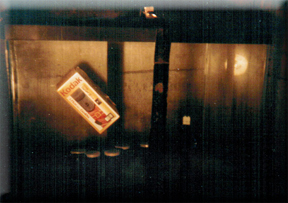
The SORRAT did produce substantial phenomena. We visited their Skyrim Farm near Columbia, Missouri in 1996 and saw the deep dents in the wood above the fireplace that was reportedly caused by their large and heavy wooden table when it was levitated during table tilting sessions. See History and Background of the SORRAT Group by I. Grattan-Guinness. Summer 2011 ATransC NewsJournal, Page 5 and The Fishharp Page 6.In later years, an extended letter writing experiment was conducted. In that study, a 20 Gallon fish tank was used as a locked “Minilab.” Motion sensing cameras recorded changes in the tank. Participants were instructed to send letters containing questions for the Imperator Group and a self-addressed stamped envelope to study coordinator Dr. John Thomas Richard who placed the letters in the Minilab along with a felt-tipped pen.Lisa participated in the letter writing experiment for a time. Richards sent out newsletters with sample answers and usually a plea for members to communicate with one another to help build the energy for PK. Lisa frequently received letters that included answers to questions submitted by others. The protocol directed her to forward the letter to the person who asked the questions, thereby strengthen the link between that member and Lisa. Lisa was required to send a copy back to Richards.Observations: The answers often included meaningful information but reflected Richard’s rather cantankerous personality. Lisa and I felt that either Richard or his son was unconsciously functioning as a physical medium as a sort of physical anchor. We suspect that all such experiments require such an etheric-physical conduit.
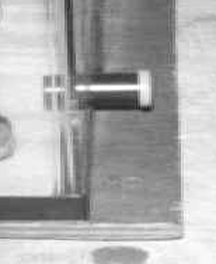
Picture from Real Communication? Report on a SORRAT letter-writing Experiment, Figure 3, Page 21, ( taken by I. Grattan-Guinness)
- Global Consciousness Project — There appears to be a global, psychic response to approaching disaster. The output of a global array of Random Event Generators (REG) maintained by the Global Consciousness Project has been shown to change in randomness just prior to major catastrophes such as the 9-11 attack on the World Trade Center. The output of individual REGs has also been shown to change in randomness when associated with meditating people. I have independently tested this effect
While we have seen changes in REG output when the attention of an able physical medium is directed toward one, the global effect may be a form of the rapport network effect. In this case, it would be the effect of many people focusing on the same concern (thoughtform).
ATransC — Prior to 2014, the Association TransCommunication included several hundred members. We noted that the quality and quantity of ITC examples shared by members appeared to improve in relationship with member interaction. As discussed in the October 2023 Etheric Studies Occasional Update 13, “The Collective as a Tool for ITC”: There is evidence that a group of people cooperating in a community produce more and higher clarity transcommunication than individuals working alone. Here are a few examples:
- Big Circle — This collective effect appears to have been active for the Big Circle which was spontaneously formed by members of the ATransC (at the time the organization was named the AA-EVP). See “Big Circle Recording Sessions” at atransc.org/big-circle-recording-sessions.
The group began as members sharing EVP examples on the ATransC discussion board. At first, a few members were having success contacting recently transitioned loved ones. As interest grew amongst the members, they came together as an online group dedicated to contacting discarnate loved ones. They decided to call themselves the “Big Circle – Bridge to the Afterlife.” I generally refer to them as the “Big Circle.” If you listen to the EVP example from Cathy offered on the Big Circle Recording Sessions web page, you can clearly hear Martha Copland’s EVP of her discarnate daughter Cathy saying, “Big Circle.”Karen Mossey was one of the core members of the group. After the ATransC became inactive, she continued the Big Circle with a number of past members and a few new people who have expressed a desire to use EVP to contact a loved one. They have websites at “Welcome to Eternity” at welcometoeternity.com and “Messages From The Big Circle” at messagesfromthebigcircle.org
You can listen to some of the examples at:
atransc.org/karen-mossey-evp
atransc.org/copeland-evp
atransc.org/debra-ann-evp
Such a successful group of practitioners appears to be unique. Our sense is that much of their success was related to the rapport they developed as a cooperating community.
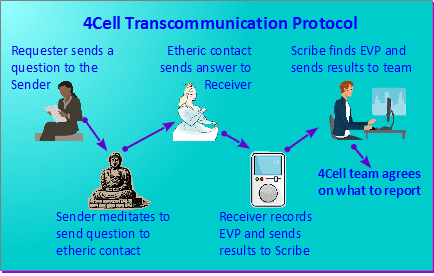
- 4Cell EVP Demonstration — While it appears that anyone is capable of recording ITC, some produce more than average and clearer examples. The Big Circle included several such practitioners which gave us the opportunity to conduct organized studies of trans-etheric influences. Assuming qualified research practitioners were available, the trick was to find a way to make recording EVP more reliable while reducing possible false positives due to witness coloring and environmental contamination.
One initiative to increase our understanding that has proven to be very effective is the 4Cell EVP Demonstration, which was conducted by association members and tracked in the Idea Exchange discussion board. The 4Cell project was designed to function as a test bed in which new ideas could be tried and the limits of EVP could be explored. As the 4Cell demonstration matured with more cells and more experiments on record, we anticipated being able to provide solid support for the existence of EVP, and the fact that EVP may be evidence of personal survival. Further, we expected this proof to be in a form that the scientific community would be able to accept, and therefore, feel obliged to repeat the experiments.
Each cell consists of four people:
1. A Requester who thinks of a request to be given to the cooperating etheric communicators. The Requester tells the Sender the request but not the expected response.
2. A Sender who is given the request and then conveys it to his or her etheric communicators while asking that they send the requested information to the Receiver. The Sender then notifies the Receiver that a request has been sent.
3. A Receiver who conducts an EVP session while asking to receive the response to the request. If the Receiver thinks EVP are in the resulting recording, the sound files are sent to the Scribe.
4. A Scribe who accepts what was received, if anything, from the Receiver and makes a first determination as to what is said in the EVP. The results of collaboration amongst Cell members are documented in a standardized report. For ATransC sponsored Cells, the report was posted on the Idea Exchange for peer review.
5. Members of a possible witness panel are then asked to consider the offered response. The Cell’s determination of what is said remains as The Report, but comments from others are retained as a record of possible alternative considerations (peer review). See the “Witness Panel” proposed Best Practice at atransc.org/witness-panel.
Cell members were asked to rotate positions for each session, but we have found that it is more important that the cell has some degree of recording success so we began asking that each Cell has at least one experienced practitioner with some level of confidence that at least some messages will be recorded. The Cells were also asked to record when possible but at least on a monthly schedule.
A report can be read at atransc.org/4cell-evp-demonstration. The study was quite successful and provided important insights about both EVP and practitioners. One of the most obvious is that members of the cell needed to focus as much on getting along as a cooperating community as on the EVP.
Cooperative Community
This is an Organizing Principle in the Implicit Cosmology:
Personalities are attracted to communities of like-minded people cooperating to facilitate personal progression.
The metaphysical argument for why I think this is true is a little complex. The bottom line is that gaining understanding is facilitated by interacting with others.
By cooperative, I mean active participation of members. Others in the community need not agree. The act of composing our thoughts to speak helps us understand what is in our worldview. Supportive or argumentative, the reaction of our listeners is important feedback which helps focus on what makes sense.
The Way of Progression
Through community comes knowledge
Through teaching comes understanding
It takes a collective
From: Your Immortal Self, Discourse 12: Progression, Teaching and Community
Social-Politico
In Studying Psi Phenomena in the Current Political Climate, I argued that there are five points of view shaping the US Government today:
- Capitalism at the Expense of Human Rights (Oligarchy leading to Neo-Feudalism)
- Belief-based Governance (Christian Nationalism)
- Self-centered Citizens (Mega)
- Community-centered Citizens (Humanists)
- Steering the Ship of State (Heritage Foundation’s Project 2025)
Academia
A similar effect is seen in educational settings in which the teachers are taught the dominant point of view and are expected to teach their students the same point of view. Papers written by teachers and their students tend to reinforce the point of view as a paradigm that is resistant to change and tends to suppress alternative views.
Based on my experience, much of parapsychology, psychology and philosophy has solidified into the Physicalist paradigm. The Physicalist paradigm does not allow such concepts as nonlocal mind and discarnate personality. As such, the Physicalist status quo is protected.
The lay community has little choice but to follow academia. Consequently personal experiences of both academic and lay people tend to agree with the Physicalist paradigm.
Each point of view represents a rapport network that reinforces the point of view.
Navigating Reality
Our worldview colors our perception of experiences. In Predictions of the Pragmatic Model of Reality: Frame of Reference, I explored a possible reason why I, as an engineer, have trouble remembering terminology used in psychology. The theory also applies to why life fields we think of as “cripotides” might be able to move from one aspect of regality to another by deliberately changing their frame of reference.
Abstract written by Microsoft’s Copilot AI based on the current content of that paper:
This paper advances a Pragmatic Model of Reality, positing that the essence of experience is fundamentally nonphysical and nonlocal. Drawing from an implicit cosmology of mind, it contends that our sense of physicality and the boundaries of what we consider real are collectively constructed through interrelated worldviews. The model proposes that by consciously reducing our certainty about the nature of reality, we can momentarily access alternative frames of reference and broaden our experiential horizons. Through logical progression and reference to spontaneous altered states, the discussion illuminates how meaning and relationship, rather than physical constructs, serve as the foundation for consciousness and reality. This empowers individuals to reimagine the constraints of time and space and engage more freely with the dynamic processes that underlie existence.
The Creative Process and Principle of Perceptual Agreement
Think of the Organizing Principle of the Creative Process as a fundamental expression of mind. I define it as:
Changes in reality are expressed via personality’s attention on an imagined outcome with the intention to make it so.
The Organizing Principle of Perceptual Agreement is defined as:
Personality must be in perceptual agreement with the aspect of reality with which it will associate.
Perception is moderated by worldview which represents a sort of database of what we think is true. Worldview moderates the perception, which in turn, moderates the creative process.
Worldview is informed by human instincts, memory and cultural teaching and is biased by temperament. A strong rapport network can influence, even teach member’s worldview.
In that way, our ability to create our personal reality is potentially enhanced by our participations in a cooperative community.
Is Rapport Bidirectional
When a link of rapport is established from person A to person B, does person B sense the connection? If so, does the person simply “absorb” the attention or does the person to some degree reflect related attention back to person A?
The SORRAT letter writing protocol was for participants to send the answers they received to both the study manager and the person who asked the question. While responses were encouraged, they were not part of the protocol.
“The sense of being stared at” studies have indicated that we do sometimes sense when someone has focused their attention on us. That suggests that rapport may be reciprocal. If so, a person might sense when we think loving thoughts (intercessory prayer) about them. Conversely, thinking meanspirited thoughts about someone might actually be harmful.
Collective Rapport
In this context, rapport is a life field’s attention on a thoughtform or other life field that is purposeful and informed by memory. As with so many aspects of reality, rapport is hierarchical in the sense that we are aware of ourselves, our family, friends, community, city-state-nation and the world.
A single biological cell is considered here as a life field. In that view, a biological organism such as a human body, consists of a hierarchy of interrelated life fields (cells) expressing specific (intended) functions, processes and with intended relationships. Life fields related to a biological organism are nonphysical; however, a species specific morphogenic memory (Rupert Sheldrake’s “Nature’s Habit”) is thought to organize the expression of related life fields as biological organism.
Life fields organized by morphogenic memory are bound together by links of rapport. How such a rapport network can be experienced as a biological organism hints at how a global network of life fields might produce reality.
My point here is that we are all bound together by a network of rapport. If reality consists of life field and their expressions, then reality is made one by rapport.