
Mental perception and Psi expression—different phenomena requiring different science.
Opinion 22

Brief
Academic parapsychology has assumed responsibility to study all kinds of anomalous phenomena. The two major kinds of phenomena focused on here are:
Type 1 – Self-reported accounts of anomalous experiences such as Out of Body and Near-Death Experiences, known here as “Psychological Phenomena.”
Type 2 – Apparently objective psychokinetically induced phenomena, such as Instrumental TransCommunication and Psi induced changes in Random processes, known here as Psi Phenomena.
The objective of this paper is to highlight the need for different approaches required for the scientific study of each type of phenomena. An argument is made for parapsychological organizations to separate their study into different organizational divisions with different standards of science. “Consciousness Studies” is suggested for the study of Psychological Phenomena. “Psi Studies” is suggested for the study of Psi related phenomena.
Also consider When Two Worlds Collide: Trying to collaborate across the Academic-Layperson Partition
Two paranormal but not the same types of phenomena
Conflation is an interesting concept. The term means “combining into one.” The term is typically used in a negative sense to point out inappropriate combining of dissimilar ideas. In this essay, trying to apply the same protocol to the research of mental perception and psychokinetic expression has led to theories that poorly support both.
I am arguing here that the study of first-person accounts of apparently paranormal experiences is different from the study of induced forms of objectively witnessed phenomena. The two types of phenomena belong in different paradigms. The practice of representing them under the same academic authority confuses public perception and our potential to understand each is complicated by the conflation of paradigms.
Type 1: Psychological phenomena – First person accounts of such personal experiences as Out of Body Experiences (OBE) and Near-Death Experiences (NDE), represent apparent dissociative states of consciousness. Such experiences are personal and subjective. Based on a more Physicalist paradigm, the expected result of researching Type 1 Phenomena is that they are mental aberration, misattribution or possible fraud.
Type 1 experiences are typically spontaneous, but replication of related dissociative mental states is possible via entrainment. However, the content of the resulting experience is always colored by the researcher’s suggestion and the experiencer’s worldview.
Psychological phenomena (Type 1) are typically studied in:
Anomalistic Psychology – Which is the study of human behavior and ostensibly paranormal phenomena with the assumption that they are entirely physical-biological effects.
Exceptional Experiences Psychology – which is basically Anomalistic Psychology but allows for Psi so long as it is treated as an emergent quality of biological mind.
Psychological phenomena may be real and are likely important to understanding human potential. I consider the Institute of Noetic Sciences (IONS) a leader in understanding human potential because of their longtime focus on science and public outreach. Scientists have been arguing over the validity of human potential research results for years; however, theories must eventually be tested by the public. IONS is one of the organizations that is focused on such real-world testing.
Human potential research offers endless possibilities for doctoral theses and research grants. Part of my concern with including this field of study in Parapsychology is that I do not recall any effort to translate such research into some form of “so what” teaching for the lay community. Yes, there are many articles written about studies, but little effort appears to be made to translate those into actionable information. It seems that academics write for academics.
Related emerging theory
A useful way to model mind is to assume it is immersed in nonphysical field of Psi information. For instance, we are perpetually receiving signals such as skin sensations from our body. A common sleep time signal from our bladder can shape our dreams by sending us in search of a dreamscape bathroom.
Our mind’s primary purpose is to shape perception of our environment. It does so by telling us a story about sensed Psi information. From my study, the resulting mental chatter is something of a potpourri of stories about what our mind is sensing via the Psi Field. This is not so much information as it is stream of thought musing.
Our worldview informs mind to shape perception. That mental chatter is colored by our worldview. If a person is very religious, their mental chatter will tend to conform to their religious beliefs. In that way, people who believe in the human potential to mentally travel beyond their physical body may be inclined to interpret a particularly vivid dream as actual travel out of body.
Comment: This is not to say OBE is an imaginary phenomenon. A test subject’s beliefs may well have been informed by same or similar prior experience. A common “research” tool favored by psychologists is the personality test. As I have seen, results indicating a test subject’s fantasy bias may not differentiate between a fantasy-prone subject and a person who has had convincing relevant experience.
Type 2: Psi phenomena – Phenomena that appear to be a mind’s psychokinetic expression of intended order and anomalous perception of information are objective and able to be witnessed by others. While some events are spontaneous, they may be induced and different induction techniques may produce different quality and quantity of results. The ability to express intended order appears to be universal but there may be a natural distribution of competency.
The outward expression of mind is referred to as Psi. In modeling mind, I characterize mental expression as a thoughtform – more like a Gestalt thoughtball – that represents a person’ intention and that is colored by the person’s worldview. Thoughtforms may be information which is sensed by other minds as thoughts. They may be psychokinetic as a nonphysical-to-physical influence. They can be consciously induced but are sometimes unconscious such as with the poltergeist effect.
People who study Type 2 Phenomena are sometimes referred to as “Survivalists” because of their support of the Survival Hypothesis. The Survival Hypothesis is simply stated as the proposition that some aspect of self continues to exist after bodily death. I refer to that as the Spiritualist’s “We are spirit having a human lifetime.” In that view, the “spirit” aspect of who we are in this lifetime just moves on to a different “atmosphere and awareness” when our body “dies.”
Important characteristics of Psi include:
- Information in the Psi Field is ubiquitous, meaning it is everywhere at once. For instance, an Instrumental TransCommunication (ITC) practitioner in New York can be on the telephone with a client in Chicago and record speech from the client’s loved one who died in Dallas. As in Remote Viewing, anomalously accessed information may originate anywhere.
- We know of no way to shield from the influence of Psi. For instance, examples of ITC have been recorded in a radiofrequency shielded compartment.
- Information in the Psi Field appears to be conceptual in that it is sensed more as a gestalt or complete framing of concepts. A reference for this is the idea that more indeterminant processes are easier to influence. Chaotic (indeterminant) noise is most suitable for ITC.
- As with perception, Psi is colored by worldview. This is one of the reasons the practitioner or interested observer is thought to provide the nonphysical-physical conduit for phenomena formation.
Characteristics of Psi appear to support the idea that mind is nonphysical, and brain is just a transmitter-receiver of Psi (Senses and psychokinetic influences).
ITC is an important tool for grief management; however, the ability to induce instances of Psi phenomena makes it an important tool for testing cosmological models.
Psi phenomena are typically objective in the sense that many people might witness the same effect. For instance, the anomalous images of visual ITC appear to be formed by the expression of intended order that acts on optical noise. Once formed, others are able to see the image stored in recoding media. The image here is an example of visual ITC collected by generating chaotic optical noise with a video feedback loop and then recording the resulting screen display with a video recorder. The example occurred in a single video frame (about 1/30th of a second sample.)
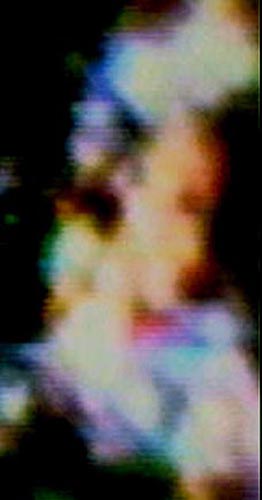
Two very different forms of phenomena
With only a BSEEE, I am not allowed to be a full member of professional parapsychology organizations. And so, I write this as an observer and member of the lay community. I do have an involved interest, though. Members of the ITC community have conducted extensive studies seeking to understand ITC. Yet, virtually none of it appears to have been considered in academic parasitology.
It has been my impression that those who apply their academic skills to study Type 1 or psychological phenomena tend to do so with a Physicalist’s perspective. Those who study Type 2 or Psi phenomena appear to be more open to nonphysical models of reality.
Psi phenomena research has been overshadowed by the better funded, better trained and more populated study of the relationship between biological brain and mind. However, by not allowing for the possibility of a nonphysical aspect of mind, that relatively mainstream study of phenomena appears to be more like half science than well-considered science.
Psi phenomena have both mental and physical aspects. That is, they appear to represent a mental expression of influence that results in a physical effect. While it is important to study the psychology of their formation, researchers skilled in physical sciences and cosmologists are also important. The task is to develop study approaches that are not based on points of view. For Psi phenomena, that is a community preference for open-minded research more in the tradition of naturalists studying the phenomena in the wild.
Theories of mind are expected to eventually emerge from parapsychology. From my perspective, a very few such as First Sight Theory, Model of Pragmatic Information and Morphic Resonance, have emerged.
Public facing effect
Perhaps the most public facing parapsychological organization is the Society for Psychical Research (SPR). The SPR Facebook page is well maintained by administrators who post a wide verity of paranormal phenomena-related articles from around the Internet.
By contrast, it appears some of the other professional organizations use their Facebook page to “tell” while discouraging comment from the public. This appears to be true for the SPR’s Psi Encyclopedia as well.
Oddly, the most common subject of parapsychology’s outreach is not theory concerning how the layperson might more realistically relate to phenomena. Instead, it is ghost hunting and historical studies of poltergeist phenomena and physical mediums. Readers might get the impression that all things paranormal happened in or before the first half of the last century.
When Lisa and I assumed leadership of the ATransC in 2000, one of our first duties was to ask academics we thought were studying Psi phenomena to be on our advisory committee. Everyone we asked said ITC was outside of their field of study. Looking back, I realize that everyone we asked was specifically studying psychological phenomena.
That was the beginning of our education about parapsychology. Ghost hunting appears to be parapsychology’s pacifier … perhaps a hobby promoted by the academic community to give them something to talk about with the lay community. The study of intended order phenomena such as ITC is seldom addressed.
It should be noted that there are a number of individuals in the lay community who are trying to inform the community. Here, I should say that, as a co-director of an ITC organization for which we sought to maintain a discerning approach to phenomena, I have been careful not to endorse organizations or publications that seemed to teach fear of the unknown or promote theories that were misleading such as claiming Psi are quantum phenomena.
It is safe to say that the opinion setters in the community desire to teach based on science and not belief. Experiencers explain their experience as rationally as they know how. Witnesses and seekers desire nothing more than to understand rather than believe. Even so, the lay community is fast evolving into a paranormal version of the New Age personal improvement culture in which belief is more explanatory than research. That is clearly the result of failed academic outreach.
All of us look to scientists to explain the world. As scientists, the parapsychological organizations have claimed that place of authority in our learning hierarchy. As long as parapsychologists claim Psi experiences are mental aberrations, there will be no room for more open-minded research.
Useful studies for refence exist
As you read lay community articles and academic research reports, pay attention to the subject matter and the author’s point of view. Objective Psi phenomena are hardly part of the discussion. The only mention of ITC is in ghost hunting literature and often concerns untested gadgets that better support pareidolia than transcommunication.
Take a look at What ITC Tells us About Consciousness. The paper describes the path members of the ATransC followed in their efforts to understand the nature of ITC. Then consider some of the other papers under the Journal Tab of ATransC.org. Why is it that none of the material is referenced in academic articles about objective Psi phenomena.
Recommendation
My evolution from seeking help and guidance from academic parapsychology to my present sense that the current organization should be abandoned, has led me to think of my work as “Consciousness and Psi Studies.” However, I am learning that the term “consciousness” has become a catchall phrase applied to anything concerned with the mind. As I discussed in my previous post, perhaps a more appropriate term is “awareness.” It is more consistent with First Sight Theory and agrees with the Pragmatic Model of Reality.
It is important not to lose progress that has been made. Dividing a field of study into separate disciplines would likely restrict collaboration between the two. More useful, I think, would be to create two separate divisions within an existing umbrella organization. Given the current vernacular, naming the mind-focused division “Consciousness Studies” and the Psi-focused division “Psi Studies” would make sense.
The real task would be to change the culture to accommodate the reason for such a division.
A Case Study
A good example of why psychological phenomena should not be conflated with Psi phenomena:
The Parapsychology Dialogues 2026 Abstracts of Presented Papers includes a brief titled “From Phantasms to Anomalous Phone Calls: A Comparative Analysis of Apparitional and Technology-Mediated After-Death Communications” by Alex A. Álvarez.
I commented on the SPR Facebook page, in part:
I read the abstract with great interest because of my own work with “Technology-Mediated After-Death Communications.” See https://atransc.org/
I expected to see references to Instrumental TransCommunication (ITC) (“ITC” is pretty much standard nomenclature for [instrument mediated] Induced After Death Communication (IADC)).
Note the term “induced.” Pretty much all instances of mainstream ADC are spontaneous and first person.
Perhaps the most important lesson we learned from ITC is that first person accounts may be relevant to the study of psychological phenomena but are useless for Psi Studies. See What ITC Tells us About Consciousness
We also found that study reports tended to be less relevant after some 15 years.
Perhaps you can anticipate my point. Álvarez’s paper is all about very old studies of first-person accounts. There was a flap of Raudive phone calls to several contactees early in our time as directors of the ATransC. As I remember, the consensus opinion was doubt and agreement that it was better to stick to studying the more objective ITC.
I fear the window of opportunity to study ITC may have already closed, being overshadowed by New Age nonsense and terminal academic neglect. Such nothing reports as this seems more an exercise in the inane.
A follow-up comment I made in response to the suggestion that the study of ITC is “still alive and well” and that the author is “wide ranging and inclusive.”
The main source referenced in the article presents as an Anomalistic Psychology. His second source is used by his main source as a primary reference suggesting circular referencing.
Then of course, the references are pretty old. The spontaneous versus induced argument was settled years ago. ADC are spontaneous and are usually first person reports and IADC are induced and objectively witnessed by others. Which do you think is useful for research?
The author also published a paper suggesting a biological origin of Psi, which is an Anomalistic Psychology argument. While it may be, the overall impression is the assumption of “physical natural” as opposed to “nonphysical Natural.” While I am not qualified to academically argue either way, his argument begins to look like his personal preference for Physicalism.
Frankly, I think the study of ITC has degenerated into studying how many ways a maker can entertain ghost hunters.
Perhaps I am being oversensitive. I really do appreciate the work of parapsychology. It is just that I have been trying to find a way to attract academically trained researchers to the study of ITC for nearly thirty years now.
In that regard, I am composing a Substack essay suggesting parapsychology has inappropriately conflated psychological phenomena with Psi phenomena. Perhaps it is time to partition the study of these phenomena as Consciousness Studies and Psi Studies.